Here's a link to some of the ETW 2007 events in case you're interested...
ETW 2007
Tuesday, March 25, 2008
Monday, March 24, 2008
Thoughts from the "Analysis-Paralysis" Department
Warning: I'm mostly an "Inner Game" guy.
I consider analysis of mechanics to be something of a Pandora's Box.
Still....
Item #1: Bounce Backs
Here's one I see often: As a student plays a downward leap I watch their embouchure. Often I see an adjustment, especially for leaps to low notes. Not, in itself, a bad thing (depending on what kind of adjustment we're talking about).
However: I often see the embouchure make too big an adjustment and then "bounce back." Basically, I think the "less is more" or "quiet down the embouchure" approaches are good here. Try the following leaps...
Look in a mirror as you do this. You may notice that your embouchure over-adjusts for the leap and then has to bounce back to a more centered position. In your sound, you may hear this as a scoop up from below the pitch.
Item #2 Pull Aways
I observed something odd in a lesson today. I have often buzzed a note on my mouthpiece and then, while continuing to buzz, gently placed the mouthpiece into the horn.
Try this buzzing an F-sharp and put in the mouthpiece while the horn is in first position. You'll end up with a very pinched F.
But ...
I've never done the opposite. Play the note on my trombone and then, while sustaining the buzz, pull the mouthpiece out of the horn.
When I did this on a low B-flat, big surprise, the buzz magically floated up to roughly a D-flat.
What caused this? Am I aiming too high?
It was easy to make a small adjustment to retain the B-flat pitch, by the way.
You might logically conclude that I could buzz a D-flat and return the mouthpiece to get the same sounding B-flat. Nope, just a really foul, uncentered something.
Incidentally, this effect doesn't seem to happen on higher notes.
Maybe it could just be the act of pulling out the mouthpiece and disengaging from the nodes of the standing wave in the horn.
I'm not too worried about it and don't plan to change anything. Still, I find it interesting. Oh and by the way, if I pull the horn off my face while attempting to continue the sound, the buzz simply stops. I know there are different opinions on this but I'm siding with the camp that says the buzz should stop.
If you try this experiment, I'd be curious to hear about your results in the comments section.
I consider analysis of mechanics to be something of a Pandora's Box.
Still....
Item #1: Bounce Backs
Here's one I see often: As a student plays a downward leap I watch their embouchure. Often I see an adjustment, especially for leaps to low notes. Not, in itself, a bad thing (depending on what kind of adjustment we're talking about).
However: I often see the embouchure make too big an adjustment and then "bounce back." Basically, I think the "less is more" or "quiet down the embouchure" approaches are good here. Try the following leaps...

Look in a mirror as you do this. You may notice that your embouchure over-adjusts for the leap and then has to bounce back to a more centered position. In your sound, you may hear this as a scoop up from below the pitch.
Item #2 Pull Aways
I observed something odd in a lesson today. I have often buzzed a note on my mouthpiece and then, while continuing to buzz, gently placed the mouthpiece into the horn.
Try this buzzing an F-sharp and put in the mouthpiece while the horn is in first position. You'll end up with a very pinched F.
But ...
I've never done the opposite. Play the note on my trombone and then, while sustaining the buzz, pull the mouthpiece out of the horn.
When I did this on a low B-flat, big surprise, the buzz magically floated up to roughly a D-flat.
What caused this? Am I aiming too high?
It was easy to make a small adjustment to retain the B-flat pitch, by the way.
You might logically conclude that I could buzz a D-flat and return the mouthpiece to get the same sounding B-flat. Nope, just a really foul, uncentered something.
Incidentally, this effect doesn't seem to happen on higher notes.
Maybe it could just be the act of pulling out the mouthpiece and disengaging from the nodes of the standing wave in the horn.
I'm not too worried about it and don't plan to change anything. Still, I find it interesting. Oh and by the way, if I pull the horn off my face while attempting to continue the sound, the buzz simply stops. I know there are different opinions on this but I'm siding with the camp that says the buzz should stop.
If you try this experiment, I'd be curious to hear about your results in the comments section.

Thursday, March 20, 2008
Accepting Dissonance to Find Consonance
Here's an idea that came up in a lesson a while back...
A student was playing along with the drone, working on locking in pitch. He was close but not right on the money. He seemed reluctant to make larger adjustments (I see this a lot).
I got him to purposely bend farther out of tune and just listen to the beats. Once he had "permission" to play the note out of tune, he seemed to relax and hear the pitch in a more non-judgmental way. In other words, he was simply hearing his intonation without any extra moral connotations.
Sure enough, he quickly "locked in" the tuning.
That's when I noted,
A student was playing along with the drone, working on locking in pitch. He was close but not right on the money. He seemed reluctant to make larger adjustments (I see this a lot).
I got him to purposely bend farther out of tune and just listen to the beats. Once he had "permission" to play the note out of tune, he seemed to relax and hear the pitch in a more non-judgmental way. In other words, he was simply hearing his intonation without any extra moral connotations.
Sure enough, he quickly "locked in" the tuning.
That's when I noted,
"Maybe you have to accept dissonance in order to find consonance."
Maybe that could a be life lesson as well.
Maybe that could a be life lesson as well.
Tuesday, March 18, 2008
BoneWeek Fanfare 5
Better late than never!
I've finished and posted BoneWeek Fanfare 5 for trombone octet.
I've made it a bit easier than previous fanfares.
It's all available free from my website...
I've finished and posted BoneWeek Fanfare 5 for trombone octet.
I've made it a bit easier than previous fanfares.
It's all available free from my website...
Wednesday, March 12, 2008
Atlanta Audition thoughts
When you don't see any posts, it means either it is summer and my brain has gone soft or it has been a crazy busy time and I need my sleep.
So, after 10 years, I finally went and took a real professional audition...Atlanta Symphony.
This was a good experience for me although the quality of my preparation left a lot to be desired. Still, all this got me to thinking about the whole audition thing.
Some random thoughts for those of you who fancy winning one of these things:
Oh yes, about the BoneWeek Fanfare. Well, I started one and ran into a wall. It doesn't help that I've been so busy. I'll try to either finish this week or let them know that I'll have to skip this year.
Ahh, spring break.
So, after 10 years, I finally went and took a real professional audition...Atlanta Symphony.
This was a good experience for me although the quality of my preparation left a lot to be desired. Still, all this got me to thinking about the whole audition thing.
Some random thoughts for those of you who fancy winning one of these things:
- Build that collection of recordings. Know the whole piece, not just the excerpt.
- As you play the excerpt, can you "hear" the orchestra around you?
- Can you sing the excerpt in tune?
- Are you taping yourself regularly? Before you buy a plane ticket, can you play a "recorder audition" well enough to advance?
- An audition tests two skills: your playing skills, and your pressure-handling skills. If you work on one and not the other, you'd better get pretty lucky on audition day.
- Can you write out the excerpt from memory? Did you get all the details right?
- On section excerpts, can you play the other parts? From memory?
- Have you looked at the score for the piece? Can you translate all the terms? Do you know what instruments outside the trombone section come into play?
- When you practice the excerpt, are you forcing yourself to play it with only shot? The third try may sound great but you won't get three takes on stage (although they gave me two on Mozart Requiem).
- What are your dynamic extremes? Try the loudest and softest excerpts at their extremes and then be able to gauge where you want to place things, dynamically.
- Are you absolutely, completely and totally sure you are playing things in tune? How do you know?
- Are you totally, completely and absolutely sure you are playing things exactly in time? How do you know?
- Tone, time and tuning are the stage. You need a solid stage but you also need to put something musically interesting on that stage.
Oh yes, about the BoneWeek Fanfare. Well, I started one and ran into a wall. It doesn't help that I've been so busy. I'll try to either finish this week or let them know that I'll have to skip this year.
Ahh, spring break.
Wednesday, February 13, 2008
Bowling for Tone
Great masterclass by Matt Guilford today! I took notes and, time permitting, will post them here.
In the meantime, here's an image that has popped up in teaching lately:
I like to think of "letting go" of the tone. Start it full, and let it roll.
For some reason, this makes me think of a smooth delivery in bowling...


In the meantime, here's an image that has popped up in teaching lately:
I like to think of "letting go" of the tone. Start it full, and let it roll.
For some reason, this makes me think of a smooth delivery in bowling...


Well, use it if it helps.
Thursday, January 24, 2008
Clapping between movements?
Here's an article in the New York Times that reminds us that the notion of no applause between movements does not extend back through the annals of history.
Not only was it common for audiences to clap between movements (gasp) but even during the music.
Here's the article.
Not only was it common for audiences to clap between movements (gasp) but even during the music.
Here's the article.
Monday, January 21, 2008
Lip Slur Errata
I have a "comment copy" of my lip slur book. Whenever I find something that is a mistake, I scribble the page number on the front cover.
It occurred to me that, if I lose that book, I'll lose all those notes.
Soooooooo...
Here are mistakes/corrections in the book as I've noticed them thus far:
p.18 #26, the 7th position mark should be placed at the beginning of the bar and, one line 2 the sharp 5th valve indication should be over the A, not the D
p.58 #38b. the 3/2 measures...not sure what I was thinking here. Best to leave them out, they don't serve a purpose, really
p.60 #39 a. 4th line. 6th position is a better choice than 4th for the last rip to a high F
p.65 #2a. 2nd line should be mezzo forte
p.76 #12 5th line should have a decrescendo following the forte, not a crescendo
It occurred to me that, if I lose that book, I'll lose all those notes.
Soooooooo...
Here are mistakes/corrections in the book as I've noticed them thus far:
p.18 #26, the 7th position mark should be placed at the beginning of the bar and, one line 2 the sharp 5th valve indication should be over the A, not the D
p.58 #38b. the 3/2 measures...not sure what I was thinking here. Best to leave them out, they don't serve a purpose, really
p.60 #39 a. 4th line. 6th position is a better choice than 4th for the last rip to a high F
p.65 #2a. 2nd line should be mezzo forte
p.76 #12 5th line should have a decrescendo following the forte, not a crescendo
Friday, January 18, 2008
Bass Trombone Heaven!
I'm thrilled to announce that we'll have two fantastic bass trombonists coming this Spring.
Matt Guilford, bass trombonist of the National Symphony Orchestra will be giving a master class on Wed. Feb. 13th from 1:15-2:30 in the School of Music Recital Hall.
George Curran, bass trombonist of the Atlanta Symphony will be giving a master class and recital on Mon. Mar 17th. Master class will be in room 006 from 1:25-2:15. The recital will be in the recital hall at 6pm.
Matt Guilford, bass trombonist of the National Symphony Orchestra will be giving a master class on Wed. Feb. 13th from 1:15-2:30 in the School of Music Recital Hall.
George Curran, bass trombonist of the Atlanta Symphony will be giving a master class and recital on Mon. Mar 17th. Master class will be in room 006 from 1:25-2:15. The recital will be in the recital hall at 6pm.
Blogworthy Music Links
This from a former student, Will Timmons:
Werning Icking Music Archive
(a bunch of material you can download free)
This (I think) from current student Alex Manley:
New York Philharmonic broadcasts on the web.
This is one I often go to get those pesky composer dates:
Composers Classical Music
enjoy
Werning Icking Music Archive
(a bunch of material you can download free)
This (I think) from current student Alex Manley:
New York Philharmonic broadcasts on the web.
This is one I often go to get those pesky composer dates:
Composers Classical Music
enjoy
Wednesday, January 16, 2008
doo-doo Bolero
OK, this one's obvious, maybe, but still useful.
In a recent lesson, a student's Bolero didn't have good time. I took a deep breath and stood next to him saying, "doo-doo-doo-doo-doo..." in 16th notes.
Like this:

Hey, it worked. Even on the next run-through when all he had was the memory of my "doo-doo's"
Reminds me of Tony Chipurn, who always told me to play Bolero with "lazy 16th notes."
In a recent lesson, a student's Bolero didn't have good time. I took a deep breath and stood next to him saying, "doo-doo-doo-doo-doo..." in 16th notes.
Like this:

Hey, it worked. Even on the next run-through when all he had was the memory of my "doo-doo's"
Reminds me of Tony Chipurn, who always told me to play Bolero with "lazy 16th notes."
He was right on the money as always.
After all this time, you're posting about WHAT??
Everybody needs a hobby.
I don't collect baseball cards or build ships in a bottle. I do, however seem to have an unnatural obsession with warm-up routines.
I guess it is like trying to play the perfect game of golf. I enjoy tweaking and tweaking, trying to find the perfect compact little routine.
And so (ta-da!) here is my latest effort, the Daily Building Block Routine.
Inevitably, I use it for a while and then find ways to improve it and move on.
Oh well, at least this new routine doesn't really violate that whole daily routine menu that I posted last Fall.
If you're interested, you can download the whole thing and give it a spin.
Now that I've gotten this out of my system, maybe I'll start blogging again!
Oh yeah, I've got to figure another BoneWeek fanfare.
I don't collect baseball cards or build ships in a bottle. I do, however seem to have an unnatural obsession with warm-up routines.
I guess it is like trying to play the perfect game of golf. I enjoy tweaking and tweaking, trying to find the perfect compact little routine.
And so (ta-da!) here is my latest effort, the Daily Building Block Routine.
Inevitably, I use it for a while and then find ways to improve it and move on.
Oh well, at least this new routine doesn't really violate that whole daily routine menu that I posted last Fall.
If you're interested, you can download the whole thing and give it a spin.
Now that I've gotten this out of my system, maybe I'll start blogging again!
Oh yeah, I've got to figure another BoneWeek fanfare.
Friday, November 30, 2007
Why is this so hard?
Here's a simple little tuning exercise that's not as easy as it looks...

Some players, once they own that trigger, begin to believe that all positions beyond 4th are alien territory. Thus a simple gliss to 6th seems to give trouble.
After finding 6th, you would think it a simple matter to gliss back to 5th accurately. Nope!
I think there are several reasons for this..
1. When we do our beloved Remington long tones, we are always measuring out from 1st position. Accurately "measuring out" is something we do a lot, but "measuring in" is something we don't practice. Maybe we should do that famous Remington pattern inverted.

2. (disclaimer, this is pretty speculative, I may have it wrong)
Beyond 4th position, the elbow begins to have to extend beyond a right angle and seems to be less accurate.
Anyway, try those glisses out with a tuner (look first, then listen), see what you think.

Some players, once they own that trigger, begin to believe that all positions beyond 4th are alien territory. Thus a simple gliss to 6th seems to give trouble.
After finding 6th, you would think it a simple matter to gliss back to 5th accurately. Nope!
I think there are several reasons for this..
1. When we do our beloved Remington long tones, we are always measuring out from 1st position. Accurately "measuring out" is something we do a lot, but "measuring in" is something we don't practice. Maybe we should do that famous Remington pattern inverted.

2. (disclaimer, this is pretty speculative, I may have it wrong)
Beyond 4th position, the elbow begins to have to extend beyond a right angle and seems to be less accurate.
Anyway, try those glisses out with a tuner (look first, then listen), see what you think.
Wednesday, November 14, 2007
U.S. Senator left trombone to get chicks
Here's a segment from a recent article posted on the Washington Post website...
Even Julia Roberts Didn't Love Him Like That
By Dana Milbank
Wednesday, November 14, 2007; Page A02
Fresh from his appearance Monday night at the Birchmere, Lyle Lovett had a gig at the Senate Judiciary Committee yesterday -- and the stage proved uncomfortably crowded with performers.
The Grammy-winning singer-songwriter, movie actor and ex-husband of Julia Roberts had come to testify about music copyrights. But the lawmakers, in the presence of a captive celebrity audience, turned the hearing room into an amateur talent show. "My parents forced upon me trombone lessons," Sen. John Cornyn (R-Tex.) informed the country music star. "I learned how to play the guitar," he added, because "the opposite sex was not attracted to trombone."
Even Julia Roberts Didn't Love Him Like That
By Dana Milbank
Wednesday, November 14, 2007; Page A02
Fresh from his appearance Monday night at the Birchmere, Lyle Lovett had a gig at the Senate Judiciary Committee yesterday -- and the stage proved uncomfortably crowded with performers.
The Grammy-winning singer-songwriter, movie actor and ex-husband of Julia Roberts had come to testify about music copyrights. But the lawmakers, in the presence of a captive celebrity audience, turned the hearing room into an amateur talent show. "My parents forced upon me trombone lessons," Sen. John Cornyn (R-Tex.) informed the country music star. "I learned how to play the guitar," he added, because "the opposite sex was not attracted to trombone."
(sigh)
Tuesday, November 13, 2007
Letting Bruckner Bark
Here's an entry from today's trombone master class.
We did an orchestral excerpt class focusing on the finale to Bruckner's 8th symphony.
Here's that opening passage:

Everybody starts fortissimo on an F-sharp out there in that treacherous 5th position.
Perhaps you've heard that, if it is in tune, a note will sound louder.
Why? How?
Sound waves can either reinforce each other or cancel each other out..

Here's a picture of two waves that are slightly out-of-sync.
Of course, if they were out of tune, you would see the peaks of one wave closer together than the other so this picture isn't perfect but hopefully you get the idea.
Here's the thing: when out of phase, the waves partially cancel each other out. Here's a great link explaining this concept.
In fact, I once saw a dog wearing collar that used active noise cancellation to cancel out the bark.
Something like this:

So, if I understand it, the collar has a microphone that records the bark and a speaker that plays it back out of phase, canceling the original sound.
Play it in tune and it will not only sound louder, it actually will be louder.
We did an orchestral excerpt class focusing on the finale to Bruckner's 8th symphony.
Here's that opening passage:

Everybody starts fortissimo on an F-sharp out there in that treacherous 5th position.
Perhaps you've heard that, if it is in tune, a note will sound louder.
Why? How?
Sound waves can either reinforce each other or cancel each other out..

Here's a picture of two waves that are slightly out-of-sync.
Of course, if they were out of tune, you would see the peaks of one wave closer together than the other so this picture isn't perfect but hopefully you get the idea.
Here's the thing: when out of phase, the waves partially cancel each other out. Here's a great link explaining this concept.
In fact, I once saw a dog wearing collar that used active noise cancellation to cancel out the bark.
Something like this:

So, if I understand it, the collar has a microphone that records the bark and a speaker that plays it back out of phase, canceling the original sound.
Of course, we don't want to use noise cancellation in Bruckner!
Play it in tune and it will not only sound louder, it actually will be louder.
Wednesday, November 07, 2007
13 Good Minutes
On my website you can find drone tone files.
12 files, each 65 seconds, droning on pure perfect fifths
(3:2 ratio, top note raised 2 cents, all that jazz)
Played back to back, the files last 13 minutes.
Put them on your ipod and spend those 13 minutes playing along with the drones, making things up as you go. Long tones, melodies, lip slurs. Just play beautifully and listen carefully.
Here's a link to the drones..
Here's a link to a summary of pitch adjustments needed for certain intervals.
12 files, each 65 seconds, droning on pure perfect fifths
(3:2 ratio, top note raised 2 cents, all that jazz)
Played back to back, the files last 13 minutes.
Put them on your ipod and spend those 13 minutes playing along with the drones, making things up as you go. Long tones, melodies, lip slurs. Just play beautifully and listen carefully.
Here's a link to the drones..
Here's a link to a summary of pitch adjustments needed for certain intervals.
Tuesday, November 06, 2007
The E-flat "Re-education camp" (Gulag)?

Oh that pesky E-flat.
sharp, sharp, sharp.
Play it sharp often enough and it starts to sound right.
How could that tuner be right? It sounds so wrong!
Maybe we should spend some time playing it flat on purpose.
Actually, I've heard of a trumpet teacher who made his freshman play F (on a B-flat trumpet) using it 1st and 3rd valves. This would be like playing the E-flat in regular 6th position...nice and flat.
After a semester of this, perhaps the ear is retrained?
Maybe trombonists need to spend a similar period of time in an E-flat "gulag," or "re-education camp" playing the note flat to retrain the ear.
Perhaps as the camp commandant reviews the trombone prisoners during their "re-education" they could play the "Ruffles and Flourishes" fanfare with the E-flats getting lower and lower.
Like this
(ouch)
Maybe we should spend some time playing it flat on purpose.
Actually, I've heard of a trumpet teacher who made his freshman play F (on a B-flat trumpet) using it 1st and 3rd valves. This would be like playing the E-flat in regular 6th position...nice and flat.
After a semester of this, perhaps the ear is retrained?
Maybe trombonists need to spend a similar period of time in an E-flat "gulag," or "re-education camp" playing the note flat to retrain the ear.
Perhaps as the camp commandant reviews the trombone prisoners during their "re-education" they could play the "Ruffles and Flourishes" fanfare with the E-flats getting lower and lower.
Like this
(ouch)
Friday, October 26, 2007
Flaming Tuba video
Not something you see everyday.
Video of a flaming tuba.
(insert pun here)
Played by the director of the Simpsons no less.
Video of a flaming tuba.
(insert pun here)
Played by the director of the Simpsons no less.
Wednesday, October 24, 2007
Music Ed. majors...*Don't* beware the shadow!
Have you heard that term "job shadowing?"
If you are a music ed. major reading this, I suggest that you not wait until your student teaching semester to find out what it's like in the real world.
Look this should be simple: figure out which band programs are successful. Contact the band director and ask if you can come out for a day to observe. Promise you won't get underfoot. Be willing to help if they want you to.
In other words...
If you are a music ed. major reading this, I suggest that you not wait until your student teaching semester to find out what it's like in the real world.
Look this should be simple: figure out which band programs are successful. Contact the band director and ask if you can come out for a day to observe. Promise you won't get underfoot. Be willing to help if they want you to.
In other words...
if you're planning to do something for a living, go out and watch somebody who is good at it.
Tuesday, October 23, 2007
A question of angle
Here's one from the "crazy idea" department.
For posture: stand tall and bring the horn to you.
For most people, this will result in the horn angling down a bit.

Ahhh, marching band season when so many are told to angle 10 degrees above horizontal (or something like that).
How to resolve this problem?
No perfect solution but I guess bending at the waist is the least bad.
This raises a question that seemed dumb at first but......
Why is the bell angled the way it is? What if the bell angled up a bit.
I'm not talking a "Dizzy Gillespie" angle..
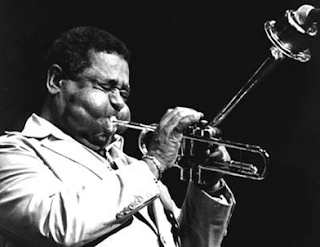
But still, what if the bell angled up a bit? How dumb is this idea?
For that matter, what if the slide angled slightly to the right? Wouldn't that make the longer positions easier to reach?
Worth considering, I think.
For posture: stand tall and bring the horn to you.
For most people, this will result in the horn angling down a bit.

Ahhh, marching band season when so many are told to angle 10 degrees above horizontal (or something like that).
How to resolve this problem?
No perfect solution but I guess bending at the waist is the least bad.
This raises a question that seemed dumb at first but......
Why is the bell angled the way it is? What if the bell angled up a bit.
I'm not talking a "Dizzy Gillespie" angle..

But still, what if the bell angled up a bit? How dumb is this idea?
For that matter, what if the slide angled slightly to the right? Wouldn't that make the longer positions easier to reach?
Worth considering, I think.
Subscribe to:
Posts (Atom)