Friday, September 30, 2011

The "Night Guy / Morning Guy" Bank Account


I remember this great comedy sketch by Jerry Seinfeld about how "night guy" was always screwing over "morning guy."
So take a (not so) hypothetical student who meant to practice more in the mornings but stayed up late doing something fun with friends.
College should be fun but it's also about balance.
So, I came up with this concept: treat those fun nights like withdrawals on a bank account.
Perhaps use this formula:

One morning of virtuous practicing adds
one dollar to your account.

One night of staying out and having fun subtracts
three dollars from your account.

(This should work great as long as your competition isn't pulling five dollars from his/her account for those fun nights).

It's all about choices.

Here's that sketch, which was Jerry's opening monologue to Episode #67, "The Glasses"

I never get enough sleep. I stay up late at night, cause I'm Night Guy. Night Guy wants to stay up late. 'What about getting up after five hours sleep?', oh that's Morning Guy's problem. That's not my problem, I'm Night Guy. I stay up as late as I want. So you get up in the morning, you're alarm, you're exhausted, groggy, oooh you hate that Night Guy! See, Night Guy always screws Morning Guy. There's nothing Morning Guy can do. The only thing Morning Guy can do is try and oversleep often enough so that Day Guy looses his job and Night Guy has no money to go out anymore.

Wednesday, September 28, 2011

Mouthpiece Buzzing: "Buzzy" v. "Windy"

No, this isn't some obscure supreme court decision.
But, like some of those decisions, this might stir up some controversy...
  1. Play a middle F on your trombone with your best sound.
  2. As you continue to attempt to play the note, gently pull the mouthpiece out of the trombone.
  3. What happens/should happen to the note when the mouthpiece is removed?
For me, the note stops pretty quickly.
Why?

When I play on the trombone, there is a slightly larger gap between upper and lower lip. The resistance of the instrument sets the lips buzzing.
Conversely, try this:
  1. Buzz a nice-sounding middle F.
  2. As you continue to buzz the note, gently insert the mouthpiece into the trombone.
  3. What does the note sound like?
For me, the answer is, "pinched...memories of middle school"
(actually junior high school in my case but that's beside the point).
Why?

When I buzz on the mouthpiece, there is a somewhat smaller gap between the upper and lower lip. This gives me a nice, full buzz on the mouthpiece but a pinched sound on the trombone.

In fact, I can slightly alter that gap to get different kinds of buzzes, ranging from what I call a "windy" buzz to what might be called a "tight" buzz.
So, we can think of a continuum like this:


I often hear advice like, "Get more buzz in the buzz." or "Strive for a buzzy buzz." To me, these can usually be translated to, "Lips closer together."
True, this kind of buzz generates a clearer tone on the mouthpiece.

But will that translate to a clearer tone on the instrument? Maybe, maybe not.

Some observations:
  1. Buzzing isn't physically the same as playing but, for most people, it helps.
  2. A tighter buzz may be useful to build embouchure muscles.
  3. A tighter buzz generates a clearer pitch to hear.
  4. A looser buzz, however, requires more air and is closer to the setting used on the trombone.
I suspect a lot of band directors out there are dutifully telling their brass players to buzz and then assuming that ...the louder the buzz, the better the tone will be on the instrument.
Maybe, maybe not.
Personally, I've been leaning towards the "windy" buzz lately. I like the volume of air it requires and, although it isn't the same as actually playing, it's closer.
Here's the tricky part: a good buzz does need a core to the sound. There is a fine and very subtle line between a good "windy" buzz and a buzz without any definition or core to the sound.
I sometimes demonstrate this in lessons by recording my buzz with the microphone to the side of my head. When we play it back over good stereo speakers, the mid-range and low-range speakers really vibrate as they play back the sound of that buzz.
For a weak buzz lacking in core...not so much.

It's subtle difference but one worth thinking about.


Monday, September 26, 2011

Sad Mickey and slide technique


Here's a common slide technique problem...reaching out towards 6th or 7th but never really reaching the position before you turn around and come back.

Sometimes I compare this to taking a trip in your car. I live in Columbia, South Carolina so, for us, Disney World is only about a 7 1/2 hour drive. We've taken the kids many times.

Imagine we're driving along in the car on that first magical trip to Disney and along about Jacksonville, I stop and announce, "OK, kids we're here!" Then I turn around and head home.
(nothing against Jacksonville, of course)

'Twould not be a happy time in that car.

So, whenever you turn around before truly experiencing the "Disney Magic" of 6th or 7th position, think of the kids.

Don't break their little hearts.


Thursday, September 22, 2011

More hardware store fun!

A former colleague, Carol Krueger, used to generously help students who were having trouble with pitch.
They would come in to work with her on sight-singing. One trick singers often use to help themselves with pitch accuracy is to cover one ear so they can hear themselves. Carol had a better system, a bent piece of tubing that pipes the sound from mouth to ear...
Of course, this doesn't quite work for buzzing the mouthpiece so, it's off to the hardware story I go to invent this variation..

(thanks to Colt Campbell for modeling)


Monday, September 19, 2011

Mac Guy vs PC Guy


I guess this ad campaign has ended. Too bad.
Like most of my posts, I'll use these guys to illustrate a point.

In a recent lesson, I was working on two basic goals with a students. One was to relax, the other was be more accurate with his slide.

  • When I worked with him on relaxing more, we saw nice progress except his slide positions got sloppy.
  • When I worked with him on placing the slide more carefully, we also saw nice progress except his sound lost resonance.
Ahh, to do both...
Mac Guy = relaxed, breathing well, etc.
PC Guy = very picky about precise slide positions.

Sadly my Google image search for a morphed image that was a blend of both guys failed. I though you could find *anything* on the web!

Wednesday, September 14, 2011

The Tuner Flip (and a deep metronome question)


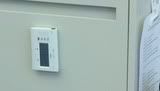
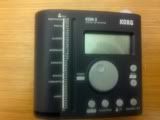
Here's a photo from my studio. Basically, it's my Korg CA tuner attached to a filing cabinet using 3M Dual Lock.

The picture isn't wrong, it's on its side.
Why?
In return, I might ask, "Who decided that Right=Sharp and Left=Flat?" When you stop to think about it, doesn't, "Up=Sharp and Down=Flat" make more sense?
It does to me.

The *initial* reason I did this was twofold:
  1. These tuners have a rounded edge and, when placed on a music stand, tend to slip.
  2. On the opposite wall of my studio, I have a mirror which I often look at while practicing. I can see the tuner in the reflection. The whole left/right thing was messing with my head but, even in a mirror, up it still up.
So, those were the initial reasons but it got me to thinking...up and down really do make more sense.

OK, while I talking about these little electronic "truth boxes" I have another question.
This actually came up years ago while I was working on my dissertation.

I noticed that all these different metronomes, used the same tempo markings for the same Italian terms. Once upon a time, somebody out there decided that "Larghetto" would range from 60-66 bpm....but who?
At least at that time, I found that every metronome was the same.
But, I couldn't find the source...who decided this? How is that everyone seemed to be conforming to this standard.


Deep questions....I shall lay awake at night.
(I hope the answer isn't long and dull. Can we blame it on aliens? Dibs on the movie rights)


Tuesday, September 13, 2011

NYPO Mahler 2 ..one spot to see AND hear

As part of the 9/11 decade commemoration, the New York Philharmonic performed Mahler's 2nd symphony. I missed the live broadcast because of a performance of my own but, fortunately, the whole thing is available in high definition on YouTube (which, we should remember, started in 2005 - four years after that terrible day...so much has changed).

Besides being moved by this great performance of one of my favorite symphonies, I found that actually watching the performers was quite instructive. In fact, I've cued up the video and used it in 3 lessons thus far.
In the following video, I've been cueing it up to roughly the 7-minute mark...the powerful chorale that starts with the trombones and bassoons. I've been using it to point out two things:

  1. Relaxation: Watch, as the music gets louder, how relaxed the performers are. Such efficiency!
  2. Embouchures: You get a lot of close-up shots. What do you notice? Not everyone is the same but there clearly are some general trends....very little movement, firm corners, etc.
Enjoy..watch, listen, learn.


Tuesday, September 06, 2011

The Golden Bah

Simple post. There is that magic moment that is neither a splinter nor a wah.

We will call it the "Golden Bah" and the people shall see that it is good.
We seek it all our lives. For some, it may feel like the Higgs-Boson particle of brass playing.

I prefer the syllable "bah" to "tah" because it focuses our attention on the lips rather than the tongue.
Go seek.

What is musical? Start with what isn't.


What is a musical performance?

Now there's a deep question. Recently I thought of a novel answer.
Start with what isn't a musical performance.
Most of us have encountered those robot voices on the phone. Especially when they are reading us a phone number. Funny how hard it is to comprehend that string of numbers when there is no inflection.
Imagine one of those voices reading a novel. [Read the following in a monotone:]
"It was the best of times, it was the worst of times."
Actually, the computers are getting better at inflection and, frankly, this makes me uncomfortable. I don't want to see a machine win a vocal Turing test.
For example, paste that above text into this website. Inflection yes, but a dramatic reading...well no Oscars yet (and hopefully not ever).
Of course, now we can now make our own animated movies like this one about a misguided trombone audition. At least there's a little inflection here...the robot voices almost make it funnier.

OK, I'm getting off my point, which is this: it is clear that an UNMUSICAL performance is one lacking in variety/inflection.
Therefore, using the counter-example, couldn't we say that a musical performance is one with variety?
Not a spastic bombardment of variety unless that's what the composer wants..you never know these days. But rather variety of dynamics, speed, articulation, tone color in a way that makes sense.

So maybe I can cobble together a definition ...

Musical (adj.): Having sensible variety.

Yes, I know musicality can't really be defined. But, when I say to a student, "How can you play that with more variety?" as opposed to , "How can you play that more musically?" it sometimes gets them thinking in a more creative and positive way.

Saturday, September 03, 2011

Dear conductors...(watch the bouncing ball)

When I was working on my master's degree I took a conducting class with Teri Murai (no 'Hajime' at that point).
He did a great demo with us: he asked us all to clap right with the ictus of his downbeat. The baton went up, fell, and we all clapped together. Here's the catch: NO ICTUS! He just let the baton fall.
Beautiful!
We all clapped together because the drop of the stick was so easy to predict...like watching a ping pong ball bouncing.
Over the years, I've worked with many conductors. This post is not meant to be directed towards any current or recent conductors but rather to the sum total of conductors I've worked with over the years.
It isn't the downbeat....it's the prep.
I can't tell you how many times I've seen conductors react to ensemble 'time' issues by snapping the downbeat.
The problem? Simple: bad preps.
At least for brass players, that natural fall of the stick is so vital. So often, the prep isn't in time and, right away, we're all scrambling to once again bail out another conductor.
Maybe this is less crucial in an ensemble that plays together all the time and can internally sense where the beat will be. Well, I'm not in one of those ensembles.

Want us to sound good? Let that stick fall naturally so we can set up properly.
Want us to sound bad? Make us guess.

Your choice....(boing)

Friday, September 02, 2011

Dear composers...


...you've gone to all that trouble to write a piece. I'm going to assume that you want it performed. I'm also going to assume that you want it performed well.

Look at that first example above. OK, it shows promise. Pretty sophisticated composer, right? Maybe this person is going to win a composition contest with this entry...

But, woah nelly, check out this second example:

Now here's a really sophisticated composer. So intelligent, so advanced...
SO MUCH HARDER TO READ!!

Of course, most of you already see it...the two examples will sound the same. Hmm, I wonder which version will lead to most errors by the performers. (Sadly, I also wonder which version is more likely to win the contest.)

Yes, I know you composer types want your scores to look sophisticated. You want everyone to respect your great genius.

But please take a moment to think about the poor saps who have to actually read your music. Believe it or not, we also want to make your music sound great.

Don't make our jobs harder than they have to be!


Thursday, September 01, 2011

That Gandalf Attitude

Practicing can be hard, lonely work. Sometimes we all need a little inspiration.
In my teaching, I often find myself helping students to discover those bad habits that are holding them back. Of course, once discovered, it's not as if these habits are just going to go away!
To be honest, we all let little things slide in our playing. Perhaps we're on a deadline. Perhaps we're tired. Perhaps we're lazy.
Still, I think there is that point in your development where you have to draw a line in the sand, so to speak, and say,
"I'm not going to allow those uncentered attacks.
I'll slow it down until I can REALLY play every note so it sounds great."

Of course this isn't much fun. It take loads of patience and a dash of inspiration to keep on going.
Enter Gandalf.
If you've seen "The Fellowship of the Ring," you'll probably remember that scene near the end where, in the mines of Moria, Gandalf faces down this gigantic fire monster with the dramatic words:
YOU SHALL NOT PASS!!

Maybe we all could stand to have that "Gandalf" attititude when confronting those really stubborn bad habits that hold us back.
For purists, here's the full quote (and a little more artwork):
I am a servant of the Secret Fire,
Wielder of the flame of Anor.
Dark fire will not avail you, Flame of Udûn.
Go back to the shadow!
You shall not pass!


You shall not pass!

Monday, August 29, 2011

Out There

"Trombones, you're late!"
These words have been spoken by many a conductor. Here's another:
"Trombones, sustain those notes, not so separated."

So, there you are sitting back in the section thinking, "Is this guy crazy? I'm starting right with him and sustaining everything!"
Time for our old friend, note shape, to make an appearance.
Look at this drawing:

"Inaudible" refers to any sound you make that can't be heard out there. Meaning, when you factor in the sounds of the other instruments and the distance from you to the conductor, or out into the auditorium, your sound isn't being heard.
If you start a note with a little "wah" there will be a split second when you are playing but they can't hear you out there.
So, to you, the note starts on time. To them, it's late.
You're both right, at least technically.
However, they are more right because, ultimately, the only thing that matters is what it sounds like out there.
This also explains why your lovely sostenuto doesn't sound so sustained out there.
So, look at that drawing. Notice the two horizontal lines. The top line is what you think you are playing (and may, in fact, be playing roughly one foot in front of the bell). The lower line is what they are hearing out there....a less sustained note that starts late.

In the end, out there is the one place that really counts.

Ironic, really, that you'll never actually hear your own sound out there.

Monday, August 22, 2011

Yo-Yo Tempos


We all know the usual adage when learning a tricky lick..
Start slowly and speed up gradually.
Here's a variation I've bumped into. I really like it...

Start at full speed and, with each repetition, slow down gradually. Eventually start speeding up again.
Like a yo-yo, the tempo goes down and back up again.

Try it out
(then throw down and walk the dog .. such a sleeper)!

Sunday, August 14, 2011

Geez, how many books is this guy going to write?

Sorry I haven't posted in some time. I have a few things I want to hit but haven't posted for two reasons:
1. I'm allowing some passage of time to avoid offending (just in case I launch into a diatribe).
2. I've been in "all hands on deck" mode to finish two new books.
If you're curious, I have put up a description and some free sample pages.
Finishing this book has been very satisfying because some of these materials go back over ten years. Never have I had so many failed attempts to write a book. Basically, I would think I had it figured out, plunge in and then, after way too much time and effort, realize I was on the wrong path. Painful to see it all go down the tubes.
But it doesn't really "go down the tubes." I don't delete any of it away and, so far, I've been good/lucky with data back-ups. So I have one folder one my hard drive which holds all of that source material.
How much?
I just looked: almost 62 megabytes and 558 files in 27 sub-folders.
That's just Finale files leading up to this project and doesn't count *any* finished books. Ouch.
Anyway, this time I hope I've got it (especially since I've already forked over my money to the printing company). By the way, I'm flirting with offering a reduced-price e-version of the book but haven't had the time to look into file security, water-marking, etc.
Some people may wonder, "Geez, how many books is this guy going to write?"
Well, the Trombone Craft series is the last BIG thing but properly finishing it will take roughly two more years (yes, I want to write a "Bass Trombone Craft" set).
Also, I've been meaning to add a feature to the Simply Singing Books: free duet parts for (almost) everything. This is not as easy as it may sound. Because these tunes are for different instruments with different ranges I can't write a one-size-fits-all duet voice because it won't fit in the range for some instruments.
My basic strategy is going to be this: for each tune write an "under" voice and an "over" voice. Then I should be able to cover a variety of ranges. I want to make the voices fit, harmonically so that it may turn out that I'm turning these tunes into little trios.
Also, I want to line up the different instruments so that a trombone player can provide the "under" voice in the keys given to the trumpet player, etc.
I figure that, somewhere, a tuba player with a crush on a cute horn player will rejoice ("hey, let's play duets sometime"). If anything develops, I expect wedding pictures!
All of this is going to take some time because I have a job, a family, gigs and a house in which stuff likes to break (this summer it was, among other things, a sewer line jamming, causing a toilet to overflow....into the air conditioning vent....you get the idea).
There are other creative ideas circling in my head like flights over O'Hare airport waiting for permission to land. Some of them have been waiting for a lonnnnng time.
Some of the ideas are projects I plan to put up on the web for free. Others will be published. Most of them are good enough that I'm keeping my lips sealed.

Now, if some rich Bill Gates type wants to float into my life and say, "Son, I believe in what you're doing. I'll set you up with a lifetime endowment so you can just live in a beautiful house by a lake and fulfill your true vision. And here is your personal assistant.." (and then I wake up)
The thing is, even if that offer arrived (about as likely as a Power Ball win, especially since I almost never buy a ticket), it would hard to walk away from teaching. I really love teaching...

...at least when the student is willing to prepare....

Thursday, June 16, 2011

Anybody remember DOS?


Does anybody remember DOS?

The computer I first interacted with looked like an electric typewriter. It was wired into a mainframe elsewhere. You typed in the commands (I was learning to program in BASIC), waited, and the results typed out magically in front of you. For me, it was pretty addictive stuff.

I remember writing a simple program to calculate how long it would take to cut the grass in my back yard. The program's result was correct within 30 seconds. Exciting stuff! It also made cutting my grass that time a lot more interesting.

Even though DOS was slower and more work, there was a joy of understanding in having the power to control that little machine in front of you.

Eventually, along came Macs, Windows, bulletin boards, html, Netscape, Firefox, Chrome, Facebook, Netflix, iPhones, android, iPads...
I wonder what names I'll need to add to that list in ten years.

Would anybody seriously suggest going back to DOS? (or punched cards before that?)

That brings me to my point (I usually have one): trombones have to deal with tenor and alto clef. I'm not ready to dump tenor, but alto? Have you ever played Prokofiev with some of the crazy changes between bass and alto clef...usually right in the middle of an exposed passage? Why doesn't somebody just re-write the parts to make them easier to read?

How about the offstage parts in Pine of Rome? Bass clef transposed?

Jumping over to French Horn and Trumpet: why do they continue to learn all those transpositions? They're not using tuning crooks anymore.

Or to really annoy everyone: Why are the musical instructions in a foreign language (just playing Devil's Advocate here)?

My point is this: in technology, even though we may feel proud about mastering the intricacies of an earlier system (such as DOS) we don't cling to it. Yet in music, we do. We don't move on, upgrade or innovate in the world of music notation. 50 years from now, trombonists will still be slogging through studies in alto clef. Hmm, why not learn mezzo soprano clef or baritone clef?

I can almost hear someone saying, "If I had to learn transposition, you're going to have to learn it as well. It builds character!!"

Is that person still entering commands
at the DOS prompt?

=============
Post blog comments:
1. Actually, I think tenor clef is the most natural clef for tenor trombone. What if we just started beginners in tenor clef?

2. If music were a more profitable business, innovations would have appeared long ago. I suspect music publishers can't afford to rework all those transposed parts.

Wednesday, March 16, 2011

BoneWeek 7

After a few false starts and dead ends, I managed to knock out another BoneWeek Fanfare. I started writing these in celebration of International Trombone Week. You can find the previous fanfares both on my website and the ITA website.

A few notes about this one.
  • There are no "quotes" of well-known trombone pieces
  • I tried to avoid falling back into any clichés (not easy sometimes)
  • I wanted it to have some rhythmic energy and no obvious presentation of a melody (see above)
With any of these fanfares, I use an odd test: would I want to play it. When I'm at a convention (like the Eastern Trombone Workshop which I'm missing...sigh) and looking through music I might purchase, I often look at the score and say, "Yuck, I wouldn't to play that part." The most common cardinal sin of composers and arrangers:
  • putting all the interest into the first part and thus generating boring parts for everyone else
  • making the first part so tiring that it becomes difficult to program such a chop-buster
These goals aren't difficult, so why do so many arrangements fail these tests. Lazy arrangers?

Anyway, here's the fanfare from my website. If you put it on a program, please let me know. It's always nice to get a concert program for my files.

You may ask, "How many of these things are you going to write?"

I have no idea.

Here's the link: BoneWeek Fanfare #7

Thursday, March 10, 2011

Free Duets!


My computer hard drive sometimes feels like a museum of old ideas. I don't get rid of much (and, yes, I use redundant back-ups), so there's a lot of old stuff sitting around in there.
I'm hard at work on my latest series of books and, as I looked through this digital museum, I came across these duets. I'm not sure why I wrote them...probably just to have some nice lyrical stuff to play in lessons.
I don't think they've ever been printed out or played.
So, have at 'em. I don't make claims to great music but they probably won't cause damage ...


Now, if you're racked with guilt about downloading free music, I *do* have a PayPal account....
(hey, you never know, there might be some eccentric millionaire out there!)


Wednesday, March 09, 2011

Who's Afraid of the Big Bad Wolf?


I'm not a big fan of breathing exercises. Breathing, I like. Exercises, not so much.

I'm not sure why. Maybe it's because time is always limited. Maybe because I'm not patient enough. The buzzing exercises I start with usually require some pretty deep breathing so maybe my cause isn't totally hopeless.

Last Fall, I tried this little exercise in a few lessons and, from time to time, I've used it in my practicing.

Take three really deep breaths and, each time, blow out like crazy.

I blow out mostly (but not completely) through my horn. I let some air escape around the sides of the mouthpiece.

I think of this quick exercise as a "lethargy buster." When I (or my students) get a little sluggish, this is a quick way to wake up and get going.

I remember trying it in three lessons in a row last Fall. Not at the beginning but somewhere in the middle when my "sluggish radar" began beeping. Each time, I was surprised and please with the improvement in their sound.
(I did warn them not emulate that wild, almost psycho manner of blowing out when they actually played.)

This is not my invention. From the Alessi Seminar, I remember Weston Sprott doing similar crazy breaths from time to time. In fact, checking a handout on his website, I see that he refers to it as the "vigorous breath."

Somehow, "big bad wolf" just seems more memorable...


Tuesday, March 08, 2011

The Most Significant Development in Music Education

I was thinking about this the other day.
There is a new development in the field of music education. The more I think about it, the more I realize how profound it is.

That development: YouTube

OK, it's now time for my "you young whippersnappers" moment...
When I was in college and had to learn a new piece or be inspired by a new player, what did I do?
  • How many professional trombone recordings were available?
  • Who was performing within driving distance?
  • Could I afford the time and money needed to see them perform?
Imitation is enormously powerful. Young players need to see and hear top players in order to set the bar.

YouTube does that.

Yes, there can be laughably bad videos. That guy trying to explain triplets was a screamer.
But (I hope) everyone saw through that.

I type "mozart tuba mirum" into the search box and I get 519 results instantly.

I'm a trombone professor and yet, in one morning, any of my students can gather more information about performances of this excerpt than I could in all of my studies throughout the pre-YouTube era.

For instance, if one of my students said, "You know, Solti once had the trombone player stand for the Mozart Requiem solo." I would probably reply with, "No way. Where did you hear that nonsense?"


How about this search: "joseph alessi trombone"
291 results

"arthur pryor trombone"
103 results

"ravel bolero orchestra"
652 results

Of course, youtube also gives us...
"justin bieber"
1,380,000

Stop and reflect for a moment on just how profoundly this is changing the world of teaching and learning music