Wednesday, August 01, 2007

Alessi Seminar Notes, Day 3 (part 2) ... Attack and Response

Please note:

These entries from the Alessi Seminar are not a literal transcript. I took written notes and then typed them up. I have made every effort to be accurate but, as you might expect, each blog entry is a meager substitute for actually being there.

Remember that many of the things Mr. Alessi says in these masterclasses are in the context of addressing the needs of a particular student and should not be seen as universal mandates to be mindlessly followed.

If you are serious about pursuing musical excellence on the trombone, there is no substitute for actually attending one of Mr. Alessi's seminars. You'll be glad you did.


Tuesday evening was another masterclass. The performers:

Nathan Dishman - Stojowski Fantasie

Sam Schlosser - Tomasi Concerto

me - Arrows of Time, Mvt 1 (and the beginning of mvt. 2)

Quartet (Sprott, Perrier, Rodriguez, Lantzy) - Ewazen Myths and Legends

Orchestra Section - Strauss Alpine Symphony and Bruckner 8


Since this was my turn to perform, I missed Sam's Tomasi.

Here are some comments:

  • You have to maintain a core to your sound as you decrescendo.
  • It is good to buzz in front of a mirror with a visualizer rim.

During one of the participant's sessions, Joe went into some very detailed embouchure analysis. I think it best not to include comments here because they were specific to the needs of this individual

These next comments were concerning my performance of Arrows. He had some nice things to say but, of course, his best gift to me was to dive right into some of my bad habits and point them out. This was great for me because I had been unaware of the some of these habits.

Here were some of his comments (as best I can remember them)

  • Point straight out into the hall. You don't need to make eye contact with the pianist. They can see you and will follow you.
  • In trying to be musical, don't flare individual notes. Think of the bigger phrase, the larger "architecture of the phrase."
  • The pedal D at the end of the first movement might not be such a great idea. It' better to just play the trigger D in the written octave.
  • If you're playing with a great sound, stay within that sound. Don't get outside of that good sound.
  • "You're like Popeye, you don't know your own strength" Don't play like a bull in a china shop.
  • Even at the peak of the phrase, always keep a singing sound. Don't let it get too intense.

He also had some very nice things to say but I don't think it's appropriate to go repeating that stuff here.

Moving on...

  • He observed that the trombone quartet can be a vehicle to help your playing because you have to listen.
  • He has mentioned many times throughout the seminar how much he loves playing in trombone quartet...one of his favorite things. He strongly emphasized the importance of getting your students to play in quartets.
  • In tuning the orchestra section, he advocates this procedure :

Tuba with bass trombone

Tuba with second trombone

Tuba with first trombone

(or similar if there are four bones in the section)

  • When playing slow chorales, clearly subdivide in your mind.
  • If you go to an audition and you're asked to lead the section, don't over-conduct.
  • "When you play soft, try to relax. The worst thing you can do is to tense up."
  • To improve rhythm, he is a big fan of a technique known as "attack and response"
  • He told a story about how, during juries, Warren Deck's tuba students always played with such impeccable rhythm. He asked Warren how they did this and Warren described this technique.
    Basically, he demonstrated by singing different passages and, during any sustained notes, snapping his fingers exactly in the time of the subdivision.
    He described those sustained notes as "dead spots" during which rhythmic accuracy can falter. By snapping the fingers, you maintain a clear sense of pulse and subdivision.


That's all for now.

Alessi Seminar Notes, Day 3 (part 1)...Aim and Fire

Please note:

These entries from the Alessi Seminar are not a literal transcript. I took written notes and then typed them up. I have made every effort to be accurate but, as you might expect, each blog entry is a meager substitute for actually being there.

Remember that many of the things Mr. Alessi says in these masterclasses are in the context of addressing the needs of a particular student and should not be seen as universal mandates to be mindlessly followed.

If you are serious about pursuing musical excellence on the trombone, there is no substitute for actually attending one of Mr. Alessi's seminars. You'll be glad you did.


The day began for the participants with a group warm-up led by Peter Ellefson. He generously gave us handout for not one but three warm-ups. He commented that he likes to update his warm-up every few years and that one shouldn't play the exact thing year after year (although it does work for some). Click on the link above and you can see these warm-ups, I blieve. Once again, I wasn't writing notes at the time but I do have a few recollections:

Pete recommended two books: The Brass Player's Cookbook and Also Sprach Arnold Jacobs.

When breathing, he recommended that you "keep the jar open" at the end of the inhalation. In other words, don't close off your throat.

He talked about the "4-1 disease" When playing a passing tone between 4th and 1st, many players play a convenient halfway position between second and third.

He included a wonderful exercise for playing extremely soft and stressed the importance of playing your very softest every day.

He spoke highly of an out-of-print book, "55 Phrasing Studies" by Jaroslav Cimera.

Lastly he threw in a very nice thought, "In order to be a quality musician, you have to be a quality human being."


The warm-up was followed, once again by a masterclass with Joe. We began the session with a moment of silence in memory of Milt Stevens.

The performers were:

Stephen Lange - Creston Fantasy

Jared Lantzy - Schnyder Concerto for Bass Trombone

Ben Perrier - Arrows of Time, Mvt 2

Quartet (Dishman, Abissi, Johnson, Brady) - Debussy Trois Chansons

Orchestra Section: Mahler, Symphony No. 2


Here are some notes:


Alternate positions present a trade-off between tone/pitch and facility.

When playing fast passages, don't worry about those little intonation adjustments (B-flat in sharp 5th and so on).

If you want to learn something quickly ... you can learn it twice as fast if you write in the positions, even the obvious ones

When demonstrating triple tonguing, I noticed he was using the T-T-K syllable pattern.

"Go for the gold, don't go for the silver."

In phrasing, your should try to earmark certain notes that you're going to go for.

When taking a breath, try to color the note before. "Think about what you're leaving in the hall"

You have to take risks. He commented that he is more impressed by someone who takes a chance even if they mess up rather than someone who only plays it safe.

Get used to placing the stand lower so the audience can see you. Don't have the stand blocking you. Also, don't let page turns distract from the music.

He suggested that we should play off to the side of the stand not right behind it.

He suggested that you should point your bell so that you're "bisecting the hall" In other words, straight out into the middle of the hall.

Many players need to move the air more slowly.

"The way you breathe affects the way you blow. It's a mirror." He demonstrated a breath with throat tension to show the sound of a bad breath. He again reminded us that the best breath is just like a sigh.

He pointed out that when you create friction or make a sound as you breathe in, you're closing off the throat.

On the old T.V. sets, you would use a dial...uhf, vhf, and you had to dial it in. In a similar way you have to dial in the note to find a sweet spot on notes.

If a new thing feels awkward, that may be good (he used an analogy of golfers who change their grip.)

"When you introduce the melody, let the melody speak for itself. You don't have to add a lot to it."

He used an interesting analogy concerning alternate positions: It's like going home and everything has changed in your neighborhood.

As you taper off the note, taper off the vibrato, ending with a straight tone.

A good practice technique for the high range is to play the passage down an octave and get it to sound the way you want. Then take it back up the octave.

"The higher the passage, the more you have to breathe deeper."

"Deep breathing does not mean making this sound (he demonstrated a somewhat noisy Darth Vader-like breath), I think that's a misconception."

For tonguing the high B-flat, he used the syllable "tee"

He also repeated (many times throughout the day) "Aim and Fire" as advice for hitting a high note.

All good quartets should try this exercise: close your eyes, then start and release together by listening to the first player.

He told a great story about Phil Myers (principal horn of the NYPO). Myers always wants to know is going on in everyone else's part. He takes the time to re-write each first horn part in Finale, adding complete cues for the other instrument parts. "When he walks into rehearsal, he is more prepared than anyone."


That's all for the morning masterclass. More to come ....

Tuesday, July 31, 2007

Alessi Seminar Notes, Day 2 (part 2).. Masterclass No. 1

Please note:

These entries from the Alessi Seminar are not a literal transcript. I took written notes and then typed them up. I have made every effort to be accurate but, as you might expect, each blog entry is a meager substitute for actually being there.

Remember that many of the things Mr. Alessi says in these masterclasses are in the context of addressing the needs of a particular student and should not be seen as universal mandates to be mindlessly followed.

If you are serious about pursuing musical excellence on the trombone, there is no substitute for actually attending one of Mr. Alessi's seminars. You'll be glad you did.


In this master class, 5 participants played:
Paul Compton - The Pugh Concerto (mvts. 1 &2)
Weston Sprott - The Grondahl Concerto (mvts. 1&2)
Joseph Rodriquez - Gershwin Medley
Louis Bremer - Sagittarius 2
Nicole Abissi - Martin Ballade

Here are some of my notes:


  • Joe quoted Wycliffe Gordon, "You have to be able to sing what you're going to play."
  • Make sure your phrase lead to the last note. When you get to the end, don't give up. Finish the phrase. He gave the analogy of a racehorse slowing down before the finish line.
  • He pointed out that the hardest thing about music sometimes is that we play with blinders on. Take the blinders off and see the whole phrase. He gave the analogy of bad drivers who don't see the whole road around them.
  • Be sure your technique is clean. He pointed out that his teacher harped on him all the time about his slide.
  • When working with an accompanist, lead don't follow. He observed that this is what messes a lot of people up when they audition for Juilliard. "They don't drive the car."
  • One possible cause for playing sharp is a too-fast air stream. "Personally, I like low and slow" Lower pitch, slower air stream.
  • He suggested that the student should try to make the sound reach to the corners of the hall. He then demonstrate and said that, as he he plays, "I'm hearing the hall ring"
  • For the tendency to play sharp he suggested that one should let the sound settle down into the pitch. He also phrased it this way, "Let the notes sit down where they want to go."
  • Joe said in his own practicing he was thinking of incorporating some pitch bending (with the embouchure) to explore the center and find the sweet spot.
  • At one point he advised a student to sing more and take more risks.
  • Regarding phrase groupings and the comparison between the small phrases and the larger phrases: he pointed out that the overall phrase mark is the most important one.
  • At one point he observed "You have to think, 'I have nothing to lose.' "
  • If you want to learn about phrasing, listen to the great singers: Frank Sinatra, Barbara Streisand, Nat King Cole.
  • "I think when you're having fun, you don't get as tired."
  • For high notes, don't use a downward pointing body position. Think of lifting your body (and bell) as you play higher. This gives you a little more leverage. Joe talked about Maynard Ferguson's trumpet players and how they would lean back while playing high notes. He suggest doing a tiny bit of that same gesture.
  • One of the keys to phrasing, never do the same thing twice.
  • A recital of trombone music can become very boring if a player plays in only one style.
  • A common musical problem is that we sometimes crescendo too soon. Often you should wait to start the crescendo.
  • Be more aware of the thematic material in the piano part. Know when to back off and let the piano lines come out.
  • Avoid the "car horn" sound where the tone has no musical shape. On many long notes, you can let the sound relax.
  • With respect to loud playing he observed that it's good to show off your stuff but that it should lead somewhere.
  • Regarding slide technique, he observed, "I'm not a "wrist-ey" player. {meaning not so much flexing of the wrist} I like to index with the slide. When I go to a position, I like to have a connection straight from the tone in my brain to my slide."
  • Avoid "panic breathing" in your performance. He described breathing as a chance to replenish yourself. Do this every chance you get.
  • "Be true to the music, not convenient to yourself."
  • Try rehearsing a piece from the ending and work towards the beginning. This way, you have a clear idea of how you want it to end.
  • Bad breathing often comes from trying to frantically rush through everything.
  • For rapid tonguing, he suggested pulling the tongue back a little (in other words, tongue farther back in the mouth.).
  • Have a consistent breath and breathe this one way whenever possible. He demonstrated by playing Bolero and then then Mozart Requiem, pointing out that he takes the same breath in either situation.
  • If you open your mouth wide to breathe, you end up closing the throat.


Wow, all this from one masterclass. I don't know if I'll be able to provide this much detail about every class (especially the ones I'm playing in), but I'll do what I can.


Oh yes, the recital. Well, what can you say......


he's the man


Monday, July 30, 2007

Alessi Seminar Notes, Day 2 (part 1)..The Warm-Up

Please note:

These entries from the Alessi Seminar are not a literal transcript. I took written notes and then typed them up. I have made every effort to be accurate but, as you might expect, each blog entry is a meager substitute for actually being there.

Remember that many of the things Mr. Alessi says in these masterclasses are in the context of addressing the needs of a particular student and should not be seen as universal mandates to be mindlessly followed.

If you are serious about pursuing musical excellence on the trombone, there is no substitute for actually attending one of Mr. Alessi's seminars. You'll be glad you did.


Today at the seminar, things really got cranking. The participants had a group warm-up led by Mr. Alessi followed by the first masterclass lasting about 3 1/2 hours. For me the afternoon filled up with rehearsals and sectionals. The day ended with Mr. Alessi's recital.

The Warm-Up Session

Joe led us through some of his ideas for warming up and maintenance. We also received an 8-page handout of exercises. I wasn't able to take notes during the warm-up itself but here are some recollections.

Breathing:
Joe showed us a breathing exercise which involved touching the toes and then straightening up and lifting the arms over the head as you breathe in.
He made an interesting analogy: air in playing is like pouring gasoline into a funnel. From your lungs you have this ample supply of air but you don't want to pour more into the funnel (lips/mouthpiece) than your lips can handle.

He also commented on how so many trombonists make the mistake of "hammering" away in their warm-up rather than working towards a relaxed, beautiful sound. Don't hammer.

The first exercise was a descending arpeggio buzzed on the mouthpiece ranging from middle B-flat down the pedal B-flat. (then the arpeggio is to be done in lower and lower keys).
A couple points about this: he advised us to scoop into the first note. Also he wanted the arpeggio to be somewhat glissy, not slotting into each note.

The second exercise, played very freely on the trombone, was basically a mixture of sustained notes and legato tonguing. The main purpose here was to find the pitch center.

During the 6th exercise, a slow, legato passage of expanding intervals he spoke of the importance of pitch accuracy and consistency. Here he made an interesting observation..

In any audition, only about 2% of the candidates stand any chance of being hired.
One of the major reasons so many candidates aren't worthy of serious consideration is faulty intonation.

Another reminder as we progressed: don't force or strain. Just get a nice relaxed, beautiful tone.

Incidentally, quite a few of the exercises were lip slur patterns.

Exercise #10 focused on slurring over wider intervals. He spoke of the importance of an even sound without favoring certain registers.
Exercise #13 consisted of a bold two-octave tongued arpeggio (B-flat to B-flat for starters) followed by a descending legato chromatic scale. Joe talked about the importance of mastering the chromatic scale starting on any note for true mastery of slide technique. Exercises 16 and 17 also focused on the chromatic scale both in triplets and 16th's.

At many points in the masterclass, he spoke about the importance of breathing well. As he described it a great breath is just like a sigh. He gave the analogy of losing something and then finding it after some searching. When you finally see it, you might heave a sigh of relief. This, he says, is the perfect breath.

He also introduced a different technique for breathing. Basically, he recommends that you maintain contact with the mouthpiece at the center and breathe in through the corners of the mouth by "stretching out" the corners a bit. He returned to this idea a couple times during the masterclass. Another phrase he used was, "Plug it in first and then breathe"

He stressed that this was an important concept to learn and that, once mastered, should really help with consistency and accuracy.

During the masterclass, I wrote down quite a few notes which I'd like to share with you. Check out the next blog for this...

Milt Stevens, you will be missed

It is with great sadness that I must report that Milt Stevens, principal trombonist with the National Symphony Orchestra passed away very recently.
Milt, who visited USC for a guest recital a few years ago, was a class act. He had a big impact on the trombone world and this sudden death is terrible shock for us all.

Alessi Seminar Notes, Day 1...SING! LISTEN!

Please note:

These entries from the Alessi Seminar are not a literal transcript. I took written notes and then typed them up. I have made every effort to be accurate but, as you might expect, each blog entry is a meager substitute for actually being there.

Remember that many of the things Mr. Alessi says in these masterclasses are in the context of addressing the needs of a particular student and should not be seen as universal mandates to be mindlessly followed.

If you are serious about pursuing musical excellence on the trombone, there is no substitute for actually attending one of Mr. Alessi's seminars. You'll be glad you did.

The first day of the seminar consisted of a reception, an opening meeting and first rehearsals for the trombone choirs.

Mr. Alessi pointed out in the meeting that the main purpose of this whole experience is to learn. He also noted that he learns quite a bit from these seminars.


Notes from the trombone choir rehearsal...

The main reminders in the rehearsal: sing and listen. In other words, never stop that singing approach to your instrument.

Also, never stop listening to musicians around you. Don't get into that mode where you are totally focused on your part and unaware of the group as a whole.

He told us a story about a conversation with a colleague in the brass section. Joe was asking him how he sounded so good in performance after performance. The colleague's reply was to just remember to keep singing. Sometimes he (the colleague) starts to hear those little voices in his head. When he concentrates on singing, the voices go away.

He pointed out that there are a lot of great players but they aren't always great listeners. "It's always easier to play with someone who is really listening."

As many of you know, James Markey just won the bass trombone spot in the New York Philharmonic. Joe made the comment that Markey was an outstanding listener.

So that's the message for today (and maybe for the whole session)


SING

LISTEN

Sunday, July 29, 2007

Alessi Seminar 5 - Day 0 ..Travel Joys

Time permitting, internet access permitting, I hope to make regular blog entries as I attend the Alessi Seminar.

The seminar starts tomorrow (Sun, July 29th). I'm in Denver after my flight was cancelled. At least they put me up in a hotel for the night.

An interesting question arises from this. You see, I've gotten in the habit of checking my trombone as baggage. This began when I flew into and out of a small Iowa airport and had no choice.

How to protect the horn? Well, here's what I do and so far I have had 5-6 successful flights with this. I have a wolfpack case (hard-sided). I wrap the whole thing in bubble wrap and shove it into a large black duffel bag. I usually stuff in a pillow and some towels for good measure. The key is to not be able to feel the edge of the case from the outside of the bag.

Thus, I end up with a large block amorphous blob that I check in that beginning. So far I have never had any damage or anything even close to damage.

Of couse, airlines do lose luggage....

Imagine that, I'd probably be the only participant in history who showed up for an Alessi seminar with no trombone!

Incidentally, I once spoke to a trombonist who had to fly several times a month. He would carry it on the plane, slinging over his shoulder in such a way that the boarding agent was less likely to notice it. If they did, they would ask him to gate check the horn. Sometimes he would even take the gate check tag off the horn as he walked down to the plane and just carry it on anyway.

Wednesday, July 18, 2007

Trombone skit on Conan

Trombones going extinct?
The solution seems mildly troubling.

Here's the link.

Wednesday, June 27, 2007

hEARing, part 1

I arise from my summer daze for a rare blog...
I've been working on memorizing Peaslee's Arrows of Time. Normally I don't bother to memorize music. Why? I've always felt you should do whatever produces the best performance. If I hesitate because of a little memory slip, the piece suffers.

I must admit, however, as I work to memorize some of the funkier intervals of that piece, I find that I must truly learn them. I find that I play them better because, since I had to memorize them, they are clearer in my ear.

So here's an equation to consider...

Memorizing = Better Inner Hearing = Better Performance

I'm not totally sold on memorizing yet but I have to admit, this is something new to consider.

You never stop learning.

Sunday, June 17, 2007

Interested in Shires Trombones?

For anybody local to Columbia, Newell Sheridan will be in town on June 20th with some horns for sale. I play Shires and love it, by the way. Just heard that the whole Atlanta Symphony trombone section has switched to Shires.
Email me if you're interested.

Friday, June 01, 2007

Trombonophilia...yet no YouTube (dang)


OK, this looks interesting and way over my little head. Still, perhaps someone out there might want to know about it.

The group has a choreographer and yet I find no video on their website or on YouTube. I get the feeling it would be interesting.

Here's a link to their blog:
http://trombonophilia.blogspot.com/


Here's the announcement that was emailed to me...

June 2007 at the Stone curated by Christopher McIntyre


Tuesday's and Thursday's (plus Friday June 1 & 29)
Trombonophilia
A month-long festival featuring New York's unusually creative group of local trombonists, all of whom compose and lead their own projects. Visit the festival site for more info at www.cmcintyre.com/trombonophilia.htm


6/1 Friday (JC)
8 pm
Trombonophilia: Chris McIntyre's SoHo SoLo
Chris McIntyre (trombone & laptop)
A new solo set of compositions from a 70's SoHo perspective (Niblock, Glass, Zummo, Rzewski) as well as McIntyre's evolving stuplimity no.3 for trombone and ISE.

10 pm
Trombonophilia: 7X7 Trombone Band
Joe Fiedler, Ben Gerstein, Curtis Hasselbring, Richard Marriott, Chris McInytre, Steve Swell, Peter Zummo (trombone)
Formed to play McIntyre's music with choreographer Yoshiko Chuma, 7X7 has performed at the River To River and Fall For Dance Festivals and Issue Project Room. Tonight features McIntyre's stuplimity series pieces for multiple trombones and Fredric Rzewski's Last Judgement (subtitled "for solo trombone or any number of echoing trombones not quite in unison")

Monday, May 28, 2007

Mnozil Brass

How is it I haven't heard of these guys before? (don't answer that!)


Anyway, good old YouTube comes through again.


Yes, they have a website. Check out the bios. Do strings and woodwinds make this much fun of themselves?

In a way, it reminds me of Blast. A mixture of brass playing and other elements.

Do all these things add up to sideshow attractions or is something new evolving? Look at it this way, without an audience, what are you left with?

On the other hand, Canadian Brass has been doing a similar shtick back when I was in high school.

And before them, Spike Jones

OK, all the historians out there can scold me on how little I know. Still, this Mnozil group seems refreshing.

Monday, May 21, 2007

Two Comparisons to Consider

First, a personal note: I sometimes refer to these days as the "Golden Days." I'm done with my teaching for the moment but the kids are still in school. Thus I have something more precious than gold: time.

I'm making good progress on writing a book and am excited about it. Of course I worry that I'll finish it, send it out and receive a giant collective yawn....but I don't think so.

Sorry the blog entries have been a bit slower (book, book, book, book). Summer does give me some time (mostly while doing yard work...dang weeds) to ruminate. Here's something to consider...two comparisons:

Conductor A
Competent, knowledgeable but not terribly enthusiastic. Often seems to be going through the motions.

Conductor B
Inconsistent, frustrating at times but clearly seems to love the music he is conducting. Often guilty of getting carried in the passion of the moment and committing technical errors.

Which conductor would you rather work for?
Which conductor will the audience respond to?

(No, you can't vote for Conductor C)
(But, hey, we can all dream...)

How about an audition...

Candidate A
Maybe not the biggest sound, not that exciting, but very accurate. Doesn't usually miss notes.

Candidate B
Maybe "goes for it" too much in trying to get a big sound and make the music exciting but tends to miss notes here and there.

Which candidate will the committee vote for? How about a committee of non-trombone players and mostly non brass players (which many committees are)?

I remember, back in the 1980's, a certain bass trombone audition (for a top-tier orchestra) in which the ultimate winner of the audition received no advancement votes from the trombone section. Not even in the first round. How would you like start a new job and discover that your new colleagues had voted to cut you in the first round but kept getting overruled by the woodwinds, strings and conductor. Yes, this really happened.

How many players of any brass instrument play mock audition rounds for strings or woodwinds? Should they? What if your career aspirations rested ultimately in the hands of someone whose concept of trombone tone isn't refined as yours?

Hey, did I just bump into Deep Question #3? Maybe.

Thinking about an all-state audition next year? I often have high school students come to take lessons with me and often they want to work on an all-state solo. I usually take the approach the most important thing is tone. I've sometimes said, "Tone is your calling card." It's the first thing they hear, the first impression you give.

BUT...
What if the judge doesn't have a carefully refined concept of trombone tone?
What if they haven't listened intently to all those wonderful Alessi recordings?
What if they aren't even a trombone player?
What if (shudder) they aren't a such a great musician?
What if they are brain-fried from having listened to 15 auditions before yours and having to listen to 12 more?

Chances are, they'll be reduced to note-counting.

Given that, what's a teacher to do?

Wednesday, May 09, 2007

Summer's Coming

Things at USC are drawing to a close. Since I get a lot of my blogging ideas from things that pop up while I'm teaching, I may not make as many entries over the summer months.

Of course, I will be heading out to New Mexico as a participant for the Alessi Seminar. I hope that I will have time and energy to post quite a few entries from the seminar.

Summer is a time when I can slow down a bit and work on those projects that take more time. Some of you may be familiar with my lip slurs book. It has always been my plan that this book would be part of a series. There are a number of other books (at least 3!) that are in various stages of development.

Of course, most summers I begin with grand plans and end frustrated that I didn't accomplish more. My only "grand" plan for this summer is to get a bit closer to finishing these books.

We'll see.

Sunday, May 06, 2007

Jake's Premise and the Amish Guy

Two stories seemingly not connected (but in my mind, they are)...

Jake's Premise

I was lucky enough to have two lessons with Arnold Jacobs before he died. In the second lesson, I just barely made it to the lesson on time.
Pause to imagine that: being late for a lesson with Arnold Jacobs!
Anyway, I started out playing some Bordogni vocalise and chipping some notes. After two lines of music, he stopped me and said, "Well, you've missed 5 notes so far. Do you really know how this goes?"

So, here was his premise: given that you are a reasonably competent musician, the only real reason for missing a note is that the music isn't clear enough in your mind.

Not your breathing,
not your chops,
not the lack of a warm-up.
not even Chicago traffic jams!
Simply this:

you don't hear it clearly enough in your head.

Could it really be that simple?

The Amish Guy

So here's one from one of my students: an Amish guy strikes his thumb with a hammer. Unlike most people (probably me if it happened to me), he didn't get angry. He simply went on with his task. Why get angry when something goes wrong? What good does it do?

As you practice, how do react when you don't play something well?
Ever get angry?
Did the anger help?
Was it necessary?

Wednesday, May 02, 2007

James Miller Recital coming up May 8th

I got this from a former student...

James Miller, trombone
Allison Gagnon, piano
Tuesday, May 8
7:30pm
Watson Hall
the North Carolina School of the Arts

Fritz Kreisler................................La Gitana

J. Guy Ropartz..................Piece in Eb minor

Frederick Chopin...........................Nocturne

David Fetter....................................Latin

Richard Peaslee...................Arrows of Time
Up
Slow-freely
#III


-------------------------------intermission---------------------------------

J.S. Bach.........................................suite in F major

Walter Hartley...................................Capriccio

Anthony Plog..............................Postcards
Moderato
Slow
III.

Johannes Brahms.............Hungarian Dances
#9, #7, #8, #1, #5

directions to NCSA

I-40 to I-52 north
exit immediately on Sprague
turn left on Sprague Street
go approx 1 mile
turn right on Main Street
at the bottom on the hill,
turn right into the entrance
to the NC School of the Arts
go up the hill, take the first left
and park in the Welcome Center
parking lot. Watson Concert Hall is up the hill and to the right

Tuesday, May 01, 2007

Yes! finally that Mythbusters trombone story

I remember getting at least 50 emails all relating that story about the Brazilian bass trombonist who put a large firecracker in his bell for a performance of the 1812 overture.
Here's a link from the website for the Darwin Awards

Everyone's told me that the Mythbusters show tested this out. Now finally (thank you Ryan!) I have a YouTube link to that episode.

Friday, April 27, 2007

Stealth Piano

So it happened (again). I was coaching a student with a pianist.

Pianist plays interlude....trombonist misses entrance.

Counting problem? No, preparation problem.

Here's a game I sometimes pull: I tell the pianist to start at some random point in the interlude. The trombonist has to figure out when to come in by listening to the piano part.

Listening, what a concept.

Reminds me of an interesting story from one of our school's wonderful accompanists. Years ago, the sax teacher arrived at her house for a rehearsal. Before ringing the doorbell, he got out his horn. When she let him in, he just started playing from a random passage in the Creston Sonata. He wanted to see if she could figure out where he was in the piece and jump right in.

Yeah, she got it.

Thursday, April 26, 2007

John Hancock's Knuckles

In the spring semester, I teach a class in secondary trombone for music ed. majors. As I go over the basics, I find myself double-checking my trombone majors for those little basic details.

Here's one that comes up at times: slide grip. Some of my students end up holding the slide in some odd way other than at the pads of the finger tips. Of course I point this out and some of them ask, "What does it matter? This way is comfortable."

Here's a new explanation to consider: when you write with a pen, don't you use the tips of your fingers for fine control?

Try signing your name by holding the pen closer to your knuckles instead. How does it look?

How would John Hancock's signature have looked had he been holding the pen close to his knuckles.
Perhaps this....


Instead of this....

Wednesday, April 25, 2007

And yet, no "00" designation...

Just had this forwarded to me by email. I'll probably get 20 more copies in the next few days.
By the way, yes, there was a jazz trombonist named Abe Lincoln.

Enjoy.

WASHINGTON, D.C. - Each year thousands are people are killed, maimed
or annoyed by trombones. The statistics of head, neck and even shoulder
injuries sustained by reed players, french horn and string sections
seated within reach of the deadly seventh position are truly
shocking ... not to mention forced early retirement due to ever-increasing
hearing problems reported by classical musicians of all types who are
forced to play the music of Wagner, Mahler and Brahms, as well as the
hundreds of alumni of the Herman, Ferguson and Kenton bands and OKOM
devotees of Kid Ory, Jack Teagarden, Abe Lincoln Jim Robinson and Lee
Gifford.

There is current legislation pending in Congress to restrict the sale
of trombones and equip them with child-safety devices. The influential
trombone lobby is, of course, opposed to this. There have even been
several proposals for requiring a so-called "trigger lock" on all bass
trombones! Every year there are reports of hundreds of innocent
children, attracted by the shiny brass and smooth, seductive curves of
an unattended instrument on a stand in the corner of a room or in an
unlocked case who are traumatized for life by the attempts of a playmate
to get a sound out of it, or who may suffer a collapsed lung or the
effects of hyperventilation by trying the same effort themselves! The
owner's feeble "I didn't know the slide was unlocked" is no excuse!
Trombones should be stored out of reach of children.

Efforts to enact a mandatory 10-day waiting period to purchase a
trombone - which would simply allow a reasonable period of time for law
enforcement officials to cross-check the purchaser's name against an
International list of registered trombone offenders and Slide-O-Mix
addicts, have been repeatedly thwarted by the powerful
Conn-Selmer-Yamaha (CSY) lobby. Law enforcement officials are
particularly alarmed over the increase in crimes involving use of the
"sawed-off" trombone or "sackbut." Legislation is also pending in
several progressive states, including New York and California, to make
carrying a concealed alto trombone a Class A felony!

Some Governors feel that there are sufficient laws already on the
books that simply need stricter enforcement - such as the 1932
nation-wide ban of screw-on bells, the indiscriminate use of Pond's Cold
Cream or KY Jelly and unsupervised emptying of spit valves on public
property. Filthy unsanitary habits which will help spread the flu this
year. One popular response to the spread of delinquent behavior is the
imposition of mandatory longer sentences for those using a trombone
while committing a crime ("Use a trombone - Go to jail"). Surveillance
video tapes have proven especially effective in identifying violators of
this statute because career criminals have often tried to avoid
convictions by having their lawyers insist that what eye-witnesses
reported as a trombone was really only an AK-47 or other legal assaul
weapon. Strict enforcement has been especially effective when used in
conjunction with the new "Three sharps, you're out" statutes that have
already been approved by many state legislatures.

Of course the automatic and semi-automatic valved models - both piston
and the middle-European rotary, are much more dangerous than the
traditional single valve trombone. Interpol has also reported the
sudden appearance of of rear-blasting Cavalry models that were thought
to have been completely eliminated during the Great Confiscation
mandated by the 1918 Treaty of Versailles signed by representatives of
every civilized country of the period. You may recall that those
instruments were melted down and became an integral part of the
Trans-Atlantic Telephone Cable that helped to unite America and Europe.
It is believed that the new source of these WMD's are isolated
factories in rural areas of China. The awesome destructive power of the
double trigger bass trombone could never have been imagined by the
founding fathers when they granted us the right to keep and bear horns.

Remember: When trombones are outlawed, only outlaws will play "I'm
Gettin' Sentimental Over You."

(author Albert Manglesdorf)

Sunday, April 22, 2007

Downbeat Ride

It's a unique experience working on excerpts over the years. You first encounter them as young as high school and, if you're serious, you'll end up playing them hundreds (thousands?) of times over the years.

As time goes by, you build habits...hopefully good ones. When bad habits creep in, sometimes it helps to play the excerpt in a different way.

One example is the famous/infamous Ride of the Valkyries. In a previous blog, I pointed out how your rhythm might be better if you related it to a familiar tune such as, say...The Mexican Hat Dance (see "Horns and Sombreros" in the archives.)
Here's a variation on the ride. Leave out the dotted rhythm and just play the downbeat notes.


Why? This variation should improve intonation and may help with developing a steady tempo. Put it another way, if you struggle with this version, the actual version probably isn't going to be a big success. Conversely, if you learn to nail this, it should help with final product.

Hope this helps.

Wednesday, April 18, 2007

Acting Cats Nag

Here are three ideas that have been rattling around in my brain waiting for me to blog them...

Be An Actor
Imaging you are acting in a play and your character is Mr. Cool. Back stage you might feel nervous but, on stage, you've got to play the part.


(OK, maybe this particular reference is a little dated and pathetic)


In other words, if you don't feel poised and confident, be an actor and imitate someone who is. Who knows, maybe it'll rub off.

Air Cats
We have two cats. Every night, we put them "in lockdown" in the back of the house so they don't bug us all night.
Don't call PETA, I'm referring to two levels of the house with food and a cat box, etc.
Still, every morning, while I'm making breakfast, they are, shall we say EAGER to get out.
Sometimes, I open the door and they try to come out at the same time, one trying to jump over the other. In recent lesson I used this as an analogy...
opening door = tongue
cats = air

In tonguing, think that the air just wants to burst out to the lips and the tongue simply releases all that air so it can come flowing through.


Nag Tape
As we practice, often we are trying to implement a new habit. Of course, the old habit doesn't just go away. Perhaps reminders would be helpful.
Take a deep breath......relax........good posture.

Try making a "nag tape": sit in a quite room with a recorder and, for about 10 - 20 minutes, give yourself these kinds of reminders (maybe once every 30 seconds or so).

Then, go about practicing while the tape plays in the background. Every now and then, as you play, you'll hear one of your reminders.

Take a deep breath


Relax


Good posture


Tuesday, April 17, 2007

KMF

Funny how different things come together.

I took my kids to see that new Disney 3D movie, "Meet the Robinsons"


So it turns out that the big saying that kept repeating in the movie was,
"Keep Moving Forward."
You know, despite disappointments and all that. It was connected to a Walt Disney quote that appears at the end of the film..

"We keep moving forward, opening new doors, and doing new things, because we're curious and curiosity keeps leading us down new paths."

Then I hear an interview with Walter Isaacson about his new Einstein biography and he mentions this quote from Einstein..
"Life is like riding a bicycle.
In order to maintain balance you have to keep moving forward."


Sometimes we are dealt disappointments. Sometimes we face tragedy.
This seems like pretty good advice to me..

KMF
Keep Moving Forward

Friday, April 13, 2007

What if...

This one from one of my students...

What if a world-famous violinist showed up in the subway one day and started playing masterworks? Would commuters stop and notice and simply pass through?

Here's an article about just such an experiment in the Washington Post.

Wednesday, April 11, 2007

Kleinhammer in my Palm

At one of the International Trombone Festivals, I went to a master class by Ed Kleinhammer, retired bass trombonist of the Chicago Symphony. As he talked and had people demonstrate, I scribbled notes in my palm pilot (cue the geek music).

Anyway, those notes have been sitting in the palm pilot ever since. I might as well share 'em.
(they're a bit abbreviated)

Kleinhammer Notes
  • The mouthpiece is the musical part, the rest of horn is an amplifier
  • The embouchure only provides ounces of resistance
  • Record yourself on the mp (play back at half speed),
  • He demonstrated breathing tube -w- string
  • Breath attack arpeggios 4 attacks to one breath. Prevent activating the cough muscle
  • Lower lip will move more than upper lip during register changes. He would use a little vibrato on Brahms 1. Vibrato serves to center the tone. "automatic center finder"
  • He has a sign in his studio "The greatest truths are the simplest."
  • We've got to form the embouchure using the least amount of muscles in our face.
  • Using these breath attacks, you get "solfege of the embouchure"
  • We're looking for shortcuts and we're cheating ourselves. There are no shortcuts.
  • As you cresc, the lower lip flies into the mp
  • After Eric Carlson, a former student, demonstrated long tones on high A, Kleinhammer commented, "This exercise was why my dog left home." (a comment on himself, not Carlson)
  • You play sharp because it sounds better to you .(student jokes) "Better to play sharp than to play out of tune!"
  • He recommended playing La Gazza Ladra using the "no" syllable. This syllable interrupts the air less and sounds better than a more explosive attack
  • He used to start out -w- mp glisses
  • If you want to be a good trombone player, you can't work on a tight time schedule.

Perhaps there's a gem in there you might like.

Tuesday, April 10, 2007

One to stabilize

Here's a quick little exercise that might help stabilize things a bit...


Keep the embouchure corners as stable tonguing as slurring. Don't let everything get all wobbly.

Monday, April 09, 2007

Simple but True (and it rhymes)

Something to say.
Nothing in the way.

OK, what do I mean?
First, Nothing in the way:
What gets in the way, distracting the listener from the music?
  • Poor tone
  • Faulty intonation
  • Bad rhythm
  • Weak ensemble blend
Next, Have something to say.
You can have good tone, be in tune, play good rhythms in time but still have nothing to say musically!

In other words, "Nice stage but where's the play?"

Something to say. Nothing in the way.

Saturday, April 07, 2007

Listen to the Details

Here's something I've been doing at the beginning of lessons lately. I play a little 5-note pattern and have the student buzz it back to me.

Then, after 5-10 of these patterns, I do the same thing but have the student play them on their instrument (I have them look away so they can't watch my slide).

I've noticed that, when buzzing, a lot of students leap too far and then have to "snap back" to the correct note. I sometimes see this when they are playing lip slurs, too.

Here's a link to some of the patterns I've been using (pdf file)

Try doing these with a buddy. If you're practicing alone, see if you can sing or buzz them accurately.

LISTEN TO THE DETAILS!

Tuesday, April 03, 2007

Spring Trombone Night

Here at USC, we always do a Fall Trombone Night and a Spring Trombone Night. Last night was our Spring Trombone Night. Here's a link if you're interested in the program.

I've also updated the USC Info section of my website somewhat.

Monday, April 02, 2007

A new bullseye

Happy Trombone Week everyone.

Here's a new concept I've thought up. I (and other teachers) have often noticed that students tend to hit notes on the high side, causing the tone to be more pinched and less resonant than it could be. Ever notice that students almost always clam on the high side of a note.

Think of each note as a bullseye..


If you are consistently aiming a little high, your tone would be a lot less resonant.

But that's not that new part.

Since we are thinking about the notion of aiming lower to fatten the sound, perhaps a better shape might be an egg shape...


I like this image because it gets across that idea of relaxing down into the fat part of the note.
I tried a google image search for "egg bullseye." This is the best I could find but I think you can get the idea...


Anyway, don't bend the notes down but DO think of finding that fat, resonant, lower part of the tone.

Wednesday, March 28, 2007

Surprise Rides and Such

Two stories, somewhat related.

Recently a student was struggling a bit in a lesson when, outside my window, a formation of helicopters flew by unexpectedly. When he saw them, without thinking he launched into Wagner's Ride of the Valkyries.
Interesting...the struggles present in the piece we had been working on suddenly vanished as he played this unexpected Ride without thinking. Remember those words: without thinking (at least not consciously!).

At the Eastern Trombone Workshop (which I sadly couldn't attend), Ko-Ichiro Yamamoto
apparently did a master class and spoke about playing bass trumpet in Wagner's Ring Cycle. If I understand correctly, he talked about picking up the horn at various times and playing some of the solo passages without relying on warm-up notes. (hope I got this right).
Interesting: being ready to go without needing those warm-up notes.


Reminds me of that movie, A Fish Called Wanda, in which Kevin Kline awakes to his alarm clock, immediately grabs a gun and fires at a target. (Followed, if I remember correctly by blowing up a rubber boot or something psycho like that).

I assume you know about the whole helicopter ride of the Valkyries thing.

By the way, this video has some violent war footage, don't click to view if you'd rather not see such things.

Tuesday, March 27, 2007

Whyyyy?

A former student of mine posted this video on YouTube recently. It's his performance of Berio's Sequenza No. 5.
A few quick notes:
Luciano Berio was a brilliant 20th century composer. He wrote a series of Sequenzas for solo instruments.
The trombone sequenza, unlike the others, involves an element of theater and is dedicated to the famous European clown Grock.
Given that the piece is dedicated to clown, performers sometimes dress appropriately.
I believe the first half of the piece represents the clown's extroverted side while the second half focuses on internal struggles (insert "Tears of a Clown" comments here).
The notes are anything but random as Berio pays careful attention not only to pitch but register as well.
My first teacher, Ron Borror, once pointed out that the first complete tone row of the piece (which is developed bit by bit) devolves into a rapid, random pattern from which only two notes jump out: B and G. Hmmm....Berio and Grock??? One wonders.
At the midpoint of the piece, the performer stops and asks, "Why" often elongating the word. This was apparently a trademark gesture of Grock's. In his act, he would often do something ludicrous, pause, and say some non-sequitor like, "Why?"
Oh yes, Grock could play quite a few musical instruments and went on to own his own circus if I remember correctly.
(insert distant sound of crickets and snores...
maybe too much detail, sorry)
Whatever, enjoy the video...


Thursday, March 22, 2007

Deep Question #2: "Just Alone?"

Here's my second deep question for the Alessi seminar.

Should you play with just intonation when playing alone?

It seems trombonists agree (as they should) that the third of a major chord should be lowered.
For example the D in this chord:


...or the G-sharp in this chord:


But what if you're playing an audition round alone and you run across this passage:


...or the G-sharp in this passage:


Will it sound better with just intonation or equal temperament?

A few thoughts:
  • I suppose in a room with a big echo, you would be harmonizing with yourself, thus just intonation.
  • To what extent do the other instruments follow these concepts of just intonation? Do the strings do this? The oboe? The trumpets? They may be on the committee.
  • If you believe in just intonation all the way, what do you when playing with piano accompaniment?

Here's a link to deep question #1 "Slide vibrato"

Here's a link to a summary of intonation adjustments on the BoneZone website.

Concert in Charleston this weekend

This email from forwarded from former student:

I wanted to pass on the word about this wonderful Duo that will be performing this weekend in Charleston. Details below!

In Freundschaft
[Steve Parker: Trombone]
[Jason Calloway: Cello]
Friday, March 23
8pm
Recital Hall, Simons Center for the Arts, College of Charleston
$5 (FREE for students)

Works by Stockhausen, Badinski, Amron, a premiere by Trevor
Weston, plus improvised compositions.

ALSO - the Duo
will offer a Master class on contemporary Cello and Trombone Music in the Recital Hall for performers and composers on Saturday March 24th at 3 PM. As a final offering, Jason and Steve will present a concert of solo pieces on the 25th at 3pm, venue, TBA.

For more information email Trevor Weston at westont@cofc.edu

Wednesday, March 21, 2007

Johnny One-Note

Here's a trick to help with expressive playing: play your phrases as musically as possible on one note.
Take Guilmant's Morceaue Symphonique, for example:


The top line is from the piece. The second line is the same rhythm without the pitches. I've circled two notes that points of greater musical tension. Aim at these notes.
Once you can play very expressively on a single pitch, add in the pitches and see if it has gotten better.
This reminds me of that observation that, when a person loses one sense (sight, for example) other senses become more keen. Once deprived of convenient pitches, you become more keenly aware of other elements that go into phrasing: dynamics, intensity of sound, vibrato, note shape, etc.

This one-note technique can also be used to clarify rhythm. Here's an example from a Galliard Sonata...


A lesson trick that can work: first the teacher and the student play the rhythm together on one note (not robotically but with good emphases). Then, the teacher stays on the single note while the student plays the passage with the pitches included.

Hope this helps.

Tuesday, March 20, 2007

Deep Question #1 "Slide Vibrato"

I just got word that I've been selected to be a participant in this summer's Alessi seminar. I hope that I'll be able to generate some good blog entries from the event. Stay tuned.

When I go there, I hope to hear his (and others') opinions on some of those deep questions for which there are no quick answers (or maybe there are).

So, as I think of these questions, I'll just blog them to make a list.

Deep Question #1 "Slide Vibrato"

Trombonists seem to have a hang-up about slide vibrato. We often think of it as cheating. I would agree that lip vibrato is probably tougher (esp. in the high range) but ...
What if the easier solution also sounds better?
I do know this: whenever I play for non-trombonists and give them the choice of slide vibrato vs. lip vibrato, they usually go for the slide vibrato.

Why do so many people have this thing about slide vibrato?
Is it because it's connected with jazz, which some people look down on?
Is it because some view it as wimping out from a "real" vibrato?


Oh yeah, there is that whole first position problem to think about.

My opinion: do what sounds best.
(and yet, I still feel that reluctance, too)

Tuesday, March 13, 2007

Zoom H4 - no moving parts


I recently put down some money on a new recorder, the Zoom H4. So far I really like it. I used to use a mini disc recorder and like it but was plagued with the problem of transferring data easily to the computer in order to burn CD's.
This new recorder records directly to an SD card (same as they use with most digital cameras) which you can easily pop into a computer.
A few other features...
  • It can take up to a 2GB card.
  • Using this card, you can record up to 380 minutes of .wav files or 34 hours of .mp3 files
  • It has two stereo mics built in (they seem to record quite well)
  • It has jacks for two XLR mics and can provide phantom power
  • It can directly connect to a computer via a USB connection
  • It has multitrack recording capability (4 tracks)
If you are serious about succeeding on the trombone, you need to record yourself regularly. You'll need to make audition tapes and demo tapes. This little machine does a beautiful job with a minimum of hassle.

Generally you can get it for around $300. I paid $279 from minidisco.com.
Here are some links if you're interested:

Minidisco site
Product review
Another product review

Wednesday, March 07, 2007

Goofy Vibrato

Time to head on down to Orlando with the kids. So I guess a Disney spin is appropriate.


Here's a trick I've been using in some lessons. Buzz sustained notes with a ridiculously wide vibrato...one might say a Goofy Vibrato.

I think this helps in a few ways:
  1. It helps you develop your normal vibrato.
  2. It helps you find the center of the note.
  3. It strengthens the embouchure.
    Why? The embouchure corners must work harder to maintain the pitch when everything is shaking around.

Make sure that, as you buzz with that wide vibrato, you don't lose the center of the pitch. Also, make sure the air continues to flow.
You can also try goofy vibrato on the trombone (stay relaxed, keep the air moving!)

Tuesday, March 06, 2007

DGD? DDG?

How to triple tongue?

You can use Da-Ga-Da Da-Ga-Da etc.

or..

Da-Da-Ga Da-Da-Ga

Most of students cling to the first way and, having already learned it, are naturally reluctant to change.

Does it matter?

Well, why do we use the Ga syllable at all? To give the tip of the tongue a chance to reset.
Doesn't it logically follow that that weakest note is the second of the two "Da's"?

Usually when playing a string of triplets, don't we want to put a slight accent on the beginning of each triplet? If so, Da-Ga-Da Da-Ga-Da puts you at a disadvantage.

For my money, Da-Da-Ga is the way to go. This puts the weakest note in the middle.

Of course there are those purists who use...Da-Ga-Da Ga-Da-Ga (starting every other triplet with Ga).

Well, maybe for you but for me that's just too weird.

Friday, March 02, 2007

Bone Frogger

Sorry..long time since my last post. Other projects have gotten in the way.

Here's one way to think of practicing, it's a little like playing frogger...


Not the first part (with the cars) but the second with the lily pads. Well, at least sort of...

Suppose you're learning a new technique like......double tonguing. You can think of each stage of the learning process as a lily pad. You hop from lily pad to the next.
Like this:


Start with something natural, like saying "da-ga-da-ga" quickly.
Now blow air against your hand using the same syllables.
Now buzz it on your mouthpiece.
Now play it on one note on your horn.
Now play it with moving notes.

If you get stuck on any one lily pad, simply jump back to the lily pad before. If that doesn't work, jump back again.


Just don't tense up and fall in the water.

Wednesday, February 21, 2007

New York Times Article: New World Symphony

This was pointed out to me by one of my students. Good article. I felt the writer really captured the feeling of professional auditions.

http://www.nytimes.com/2007/02/18/arts/music/18waki.html?pagewanted=2&_r=2&ref=arts


Saturday, February 17, 2007

Tenuto: The Truth is Out There

So you're in an ensemble, playing a big tenuto passage. You feel as if you're really sustaining the notes.

Later you hear the recording and the trombone notes sound separated. "What's going on?" you think. "I know we were sustaining those notes..."

Look at the diagram below:


Everything above the line can be heard out in the hall. Everything below the line may audible where you're sitting but not out there.
If you're not really sustaining the dynamic the effect is separation.


Consider the reverse: if a younger brass section tends to "wah" their attacks...


In this case, they started the note on time but, to the conductor, it sounds like they are coming in late.

"Get right to the ah of tah"


Thursday, February 15, 2007

Bone Laws!

I guess I'm inspired by those beer commercials in which a bunch of guys sit around a table and declare things to be MAN LAW


Well, for the USC Band Clinic master class I thought I'd have some fun and create a list of Bone Laws.
Here's a link to the pdf file on the BoneZone website.


No, I'm not endorsing Miller Lite, or beer, or men or laws. I'm also not not endorsing them.
Please no lawsuits.

Tuesday, February 13, 2007

Little Dotted Magic Tricks

More image fun!
Try out these two:


"Hmm," you ask, "What could be the connection this time?"

The Carolina Trombone Collective recently performed a transcription of Handel's Music for the Royal Fireworks. The allegro section of the overture has extended passages of dotted rhythms. Like this:


Maybe I'm hyper-sensitive to this but, in rehearsal I gave them grief for slipping into "triplet mode"...


And thus I return to my old theme..Relate to the Familiar!!

What do most kids say after pulling off a magic trick....


TA-DAAAH

It's interesting how, wherever you go, people say those syllables with the same rhythm (quick "TA" right before the "DAAH")

Sooooo...

Think of that dotted rhythm sequence as a string of little magic tricks...
"Daaah, Ta-Daah, Ta-Daah, Ta-Daah, etc.)

Saturday, February 10, 2007

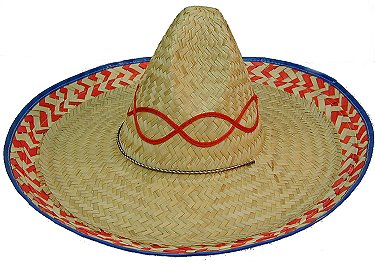
Horns and Sombreros

Two more images to link...


Perhaps you've worked on Wagner's Ride of the Valkyries. This excerpt poses many lovely challenges. One of them: make sure the pickup notes are triplets.

A recent lesson: a student couldn't get the triplet feel. With the metronome running, I asked him to play the Mexican hat dance. BOOM! the triplet troubles vanish.

Old theme: relate to the familar!

Metronome still running, I ask him to start out with mexican hat dance and then transition smoothly into Valkyries. Like this:


No triplet troubles on hat dance BUT as soon as he switches to "Valkyrie Mode" the triplet feel is lost.

Hmmmm...

Wednesday, February 07, 2007

Cake and Colts

OK, so I'm going to try to link these two images:


Cake and the offensive line of the Indianopolis Colts.

Here goes:
Perhaps you've heard of the big three:

  1. In time
  2. In tune
  3. Good tone


In other words, the Three T's.

As you seek a vibrant, compelling musical performance, don't lose track of those basic three elements.
Think of it this way: it doesn't matter if you've got great frosting if you have a lousy cake.

The Three T's = the cake
Musical nuances = the frosting


Imagine the final two players at an audition. One player has all that "frosting" stuff but the cake isn't quite as solid. The other player may not be the most subtle musician but, man, that "cake" is totally solid. You want to root for the "frosting" player but the "cake" player is just so solid!

Reminds me of the superbowl. From what I saw of it, the real source of the Colts victory was that offensive line. Imagine those Bears defensive linemen: spinning, faking, twisting. But, play after play, there was just no getting past those stolid offenseive lineman.

Flashy defensive player = the "frosting" player
Immovable offensive player = the "cake" player


Of course, ideally, you want both great cake and great frosting...

Sunday, February 04, 2007

Accurate Hungarians

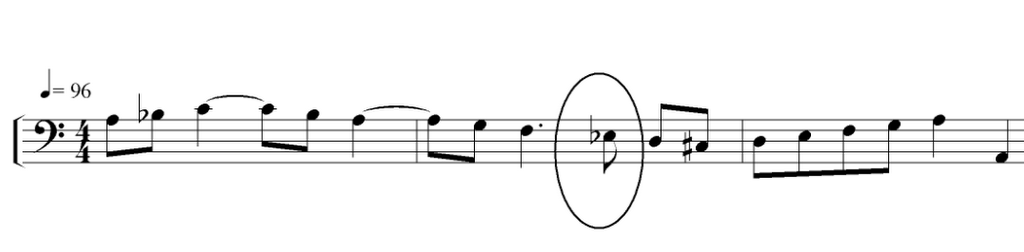
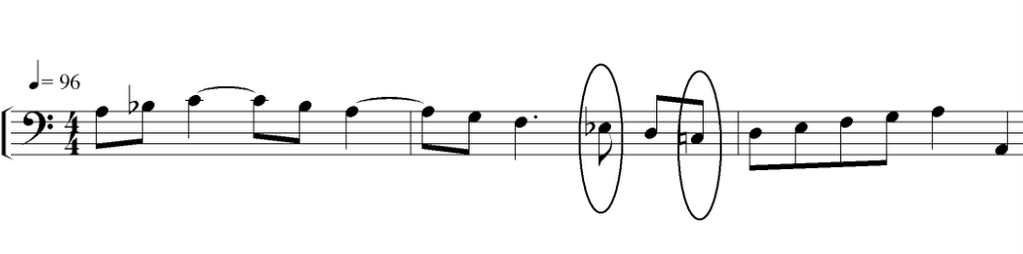
Here's a good trick for improving slide accuracy. Take this example from Hungarian March by Berlioz...


Sometimes the slide placement/accuracy isn't so hot. To improve your accuracy (and your ear), try changing some of the notes in the run, like this....


Or this....


In other words: wrong notes on purpose BUT hear them as you play the run.